


Exploring the use of posca and acrylic paint in gel printed paintings.
Updated: May 23
Creating artwork that captures the physical and emotional layers of identity can be a complex challenge. I try to explore the worn and weathered surfaces of urban life and bring these forms of making to my prints and paintings, inspired from the billboards of my past. In a recent series of gel printed paintings, I have been combining Posca pens with acrylic paints to create abstractions and portraits that reveal more than just a likeness. A recent study has been a self-portrait, the first one created since 2022.
This post explores this unique process of layering, stripping back, and rebuilding colour to evoke the texture and weathering, offering insights into how these idioms can shape painting and printmaking.
The foundation: Using Posca pens for initial drawing
I begin these gel print portraits with a drawing made using Posca pens, usually a black pen. These pens are prized for their vibrant, opaque colours and smooth application on various surfaces. The initial drawing serves as the skeleton of the artwork, capturing the essential features, forms and expressions of the face and body.
Why Posca pens? Their ability to create sharp, clean lines that stand out against the textured background makes them ideal for the first layer
Drawing on gel prints: The gel print surface is slightly tacky and receptive to the pen’s pigment, allowing for precise control and looseness
Expressive lines: My use of Posca pens is not just technical but expressive, capturing emotion and personality with each stroke
This form can take on the effect of stained glass windows, and is something that has evolved from my work made on the MA at Falmouth University in 2011-12, as seen in Mindscape: A Year in Cornwall (Purchase at Amazon).
This first layer is crucial because it sets the tone for the entire piece. It acts as a visual anchor that remains visible even after multiple layers of paint are added and removed.
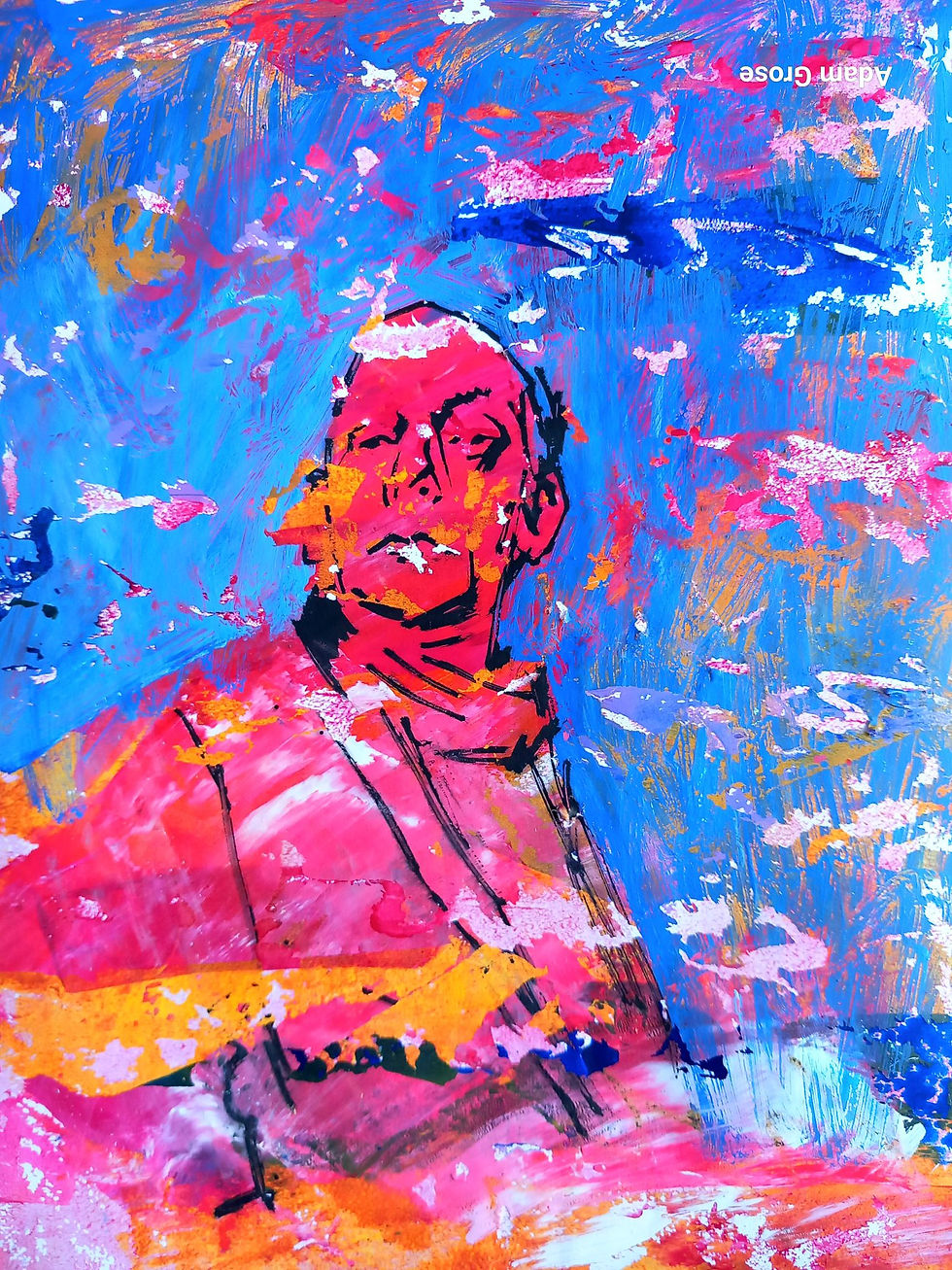
Building layers with acrylic paint
Once the initial drawing is in place, I apply layers of acrylic paint over the gel print. Acrylics are chosen for their versatility and quick drying time, which allows for rapid layering and reworking.
Layering technique: I add colour in thin washes by brush or plastic pallet knife, depending on the mood
Stripping back: After applying paint, I begin to peel back parts of the surface using strips of masking tape. This reveals the underlying layers, including the Posca drawing and earlier paint applications
Re-adding layers: The process of adding and removing paint is repeated multiple times, creating a complex surface that mimics the peeling, torn look of old billboards, peeling paint and old bill postered walls.
This layering process is not too random. Each peel reveals a history of the artwork’s creation, much like how a weathered billboard shows traces of past advertisements and the effects of time.
The worn and weathered look as a metaphor
The worn and weathered appearance of my work is more than an aesthetic choice. It reflects the passage of time, the impact of environment, and the layers of experience that shape identity and urbanisation.
Billboard idioms: Billboards in urban spaces often become torn, faded, and layered with new posters. This visual language of decay and renewal resonates with the exploration of society and the urban environment
Symbolism of wear: The peeling paint and exposed layers symbolise vulnerability, resilience, and the complexity of the human condition
Connection to printmaking: The gel print technique itself is a form of printmaking that allows for texture and layering, reinforcing the theme of accumulation and erosion.
By using these idioms, I seek to connect a personal portrait to broader themes of urban life, environmentalism and memory.
This approach challenges traditional portraiture by focusing on the process and materiality as much as the image itself.

Practical tips for artists interested in this technique
Artists wanting to experiment with gel printing, Posca pens, and acrylic layering can try these steps:
Start with a simple drawing using Posca pens on a gel print plate
Apply thin layers of acrylic paint, allowing each to dry before adding the next
Use masking tape to press on top to peel back paint selectively
Experiment with different colours and textures to create contrasts and complimentary colours
While a layer is wet, use a blunt tool to score in marks (Be careful it's not a shart tool, because you do not want to damage your gel plate)
Embrace imperfections and randomness in the stripping process to add character.
This method encourages exploration and patience, rewarding artists with rich, textured results.


Comments